Iguanodon

Life reconstruction of Iguanodon in a quadrupedal walking posture, illustrating its robust body, beaked skull, and distinctive thumb spike (pollex ungual) within an Early Cretaceous floodplain environment.

The Dinosaur That Started Everything Before T. rex, before Jurassic Park, before the word “dinosaur” even existed — there was Iguanodon. It was only the second dinosaur ever scientifically named. Its teeth, found by the side of a road in Sussex in 1822, helped convince the world that giant reptiles had once ruled the Earth. … Read more

Apatosaurus

Illustration of an Apatosaurus walking through a Late Jurassic floodplain with an explorer riding on its back

The Dinosaur That Spent a Century Wearing the Wrong Head For decades, museum visitors around the world stood in front of Apatosaurus and admired it, with a completely wrong skull bolted to its neck. A squarish, snub-nosed head from an entirely different dinosaur. The actual Apatosaurus head is narrow, long, and peg-toothed, much more like … Read more

Deinonychus

Illustration of a feathered Deinonychus in an Early Cretaceous floodplain with an explorer crouching beside it

One Small Dinosaur Changed Everything In 1964, palaeontologist John Ostrom dug up a fossil in Montana that helped transform how science understood dinosaurs. The animal he found was small, agile, birdlike — and nothing like the plodding, cold-blooded lizards scientists had assumed dinosaurs were. Its name was Deinonychus. Much of how we picture dinosaurs today … Read more

Parasaurolophus

Illustration of a Parasaurolophus walking through a Late Cretaceous floodplain with an explorer riding on its back

It Had Eight Feet of Breathing Tube on Its Head Before air reached its lungs, a Parasaurolophus breathed through nearly eight feet of hollow pipe curling up from its nostrils, over its skull, and back down again. That extraordinary structure — the crest — is one of the most unusual things any large land animal … Read more

Diplodocus

Illustration of a Diplodocus walking through a Late Jurassic floodplain with an explorer riding on its back

The Longest Animal That Ever Walked on Land Picture a creature so long that its tail alone was roughly the length of a school bus. That was Diplodocus — and the tail was still just one end of it. From tip to tip, this animal stretched the length of two and a half double-decker buses … Read more

Allosaurus

Allosaurus fragilis in lateral profile showing elongated skull with lacrimal crests and three-clawed forelimbs in a Late Jurassic conifer woodland

One of the dominant apex predators of the Late Jurassic Before T. rex ever existed, Allosaurus ruled. For millions of years, it was the top predator across a landscape that would become the American West — a massive, agile hunter with a skull built like a weapon and teeth that never stopped growing back. Al-oh-SAWR-us … Read more

Ankylosaurus

Scientifically accurate reconstruction of Ankylosaurus magniventris walking across a Late Cretaceous floodplain with realistic armor, natural sunlight, and correct quadrupedal posture.

Ankylosaurus (AN-kih-lo-SORE-us) Seventy million years ago, something walked through the forests of North America that was essentially a living tank — and it carried a massive tail club that may have been capable of delivering bone-breaking impacts. AN-kih-lo-SORE-us — “AN-kih-lo-SORE-us” Fast Facts When Around 68–66 million years ago — the very end of the Cretaceous, … Read more

Brachiosaurus

Brachiosaurus altithorax - live specimen reconstructed

Brachiosaurus (BRACK-ee-oh-SORE-us) Picture the largest animal you’ve ever seen. Now double it, give it a neck like a construction crane, and put it in a forest where even the tallest trees were snacks. BRACK-ee-oh-SORE-us — “BRACK-ee-oh-SORE-us” Fast Facts When Around 150–145 million years ago — Late Jurassic, back when North America was a warmer, wetter … Read more

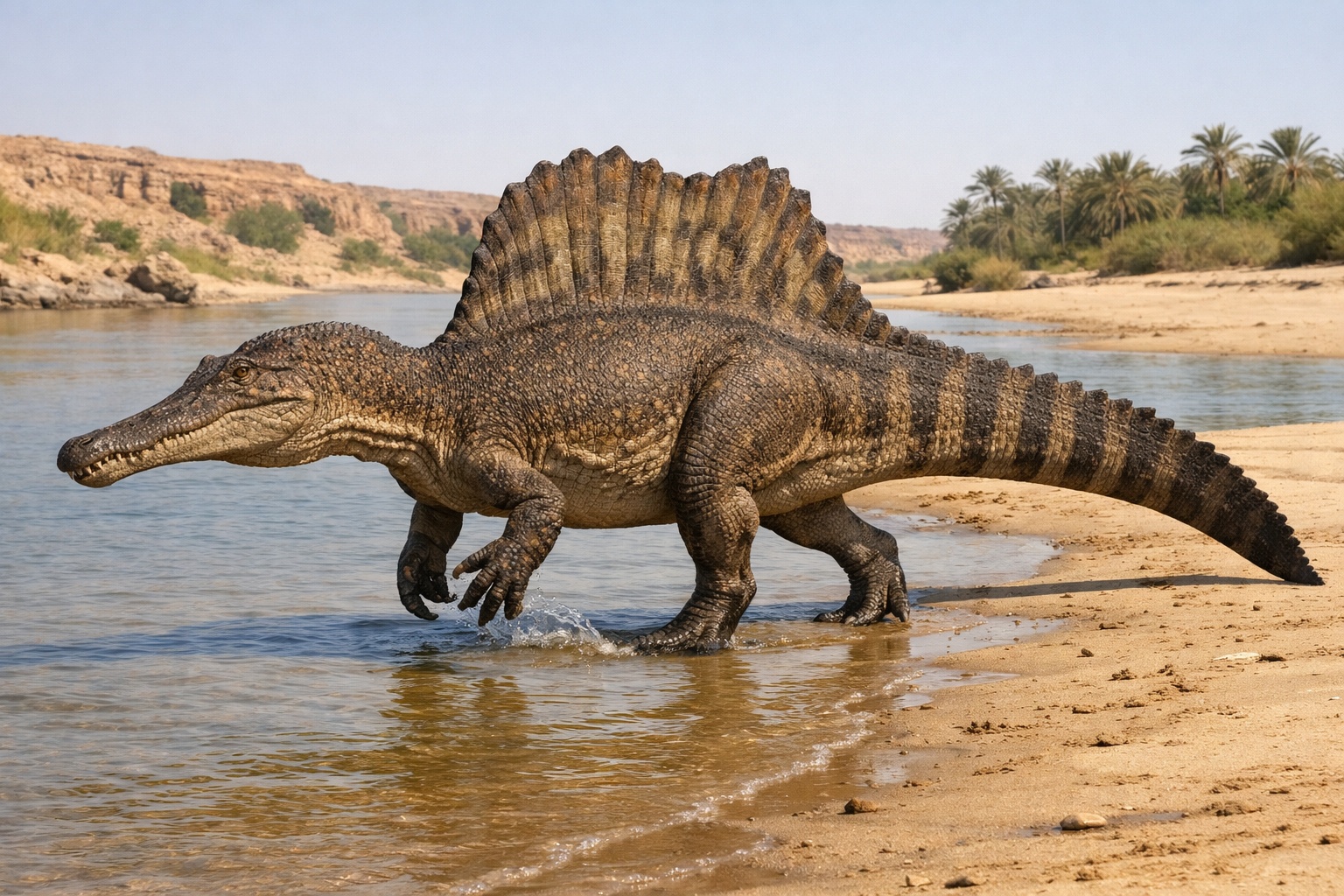
Spinosaurus

Scientifically accurate reconstruction of Spinosaurus aegyptiacus wading in a Late Cretaceous river with paddle-shaped tail, low-slung body, and semi-aquatic proportions.

Spinosaurus (Spy-no-SORE-us) One of the largest predatory dinosaurs ever discovered may have spent significant time in the water — and scientists are still arguing about exactly how it did it. Spy-no-SORE-us — “SPY-no-SORE-us” Fast Facts When Around 95–100 million years ago — back when the Sahara was a vast network of rivers and wetlands, long … Read more

Stegosaurus

Stegosaurus reconstruction

Imagine a Dinosaur With Plates Bigger Than Pizza Trays on Its Back If you saw a Stegosaurus wandering past your house, you’d probably notice the giant plates first—its four tail spikes swinging like built-in spears. But the strangest part? Its huge back plates likely played roles in display, species recognition, and possibly deterrence. Stegosaurus looked … Read more