
Dinopedia
They Ruled the Earth for 160 Million Years. Shouldn’t You Know Them?
Somewhere out there, a seven-year-old can name fifteen dinosaurs without pausing for breath. They know the horns, the teeth, the tail clubs. They know which one was fastest, which one was biggest, and which one Hollywood got completely wrong.
At some point, most of us stopped paying attention. Dinopedia is here to fix that.
This is a place for anyone who ever looked at a dinosaur skeleton in a museum and felt something — curiosity, wonder, a little bit of awe at the sheer improbability of these animals. We cover the species everyone’s heard of and the ones that deserve far more attention, and we do it without the dry textbook language that makes prehistory feel further away than it already is.
Dinosaurs were not slow. They were not stupid. Some of them had feathers. Some of them were good parents. Some of them were stranger and more surprising than anything a screenwriter has invented. Dinopedia tells that story — and tries to make sure you’ll want to repeat it.
Meet the Species
T. Rex

The most famous predator in history had arms so short they couldn’t reach its own mouth. It also had one of the most powerful bites ever measured in a land animal — enough to crush bone. T. rex was built less like a sprinting hunter and more like a devastating force of nature, and scientists are still arguing about exactly how it moved, hunted, and lived.
What’s not up for debate: nothing about it was boring.
Triceratops

Three horns, a massive bony frill, and a body the size of a large truck. Triceratops is one of the most recognisable animals in Earth’s history — and one of the most misunderstood. Those horns weren’t just for fighting. That frill may have been used for display. And Triceratops lived right at the end of the Cretaceous, meaning it was among the last non-avian dinosaurs standing before the asteroid changed everything.
Brachiosaurus
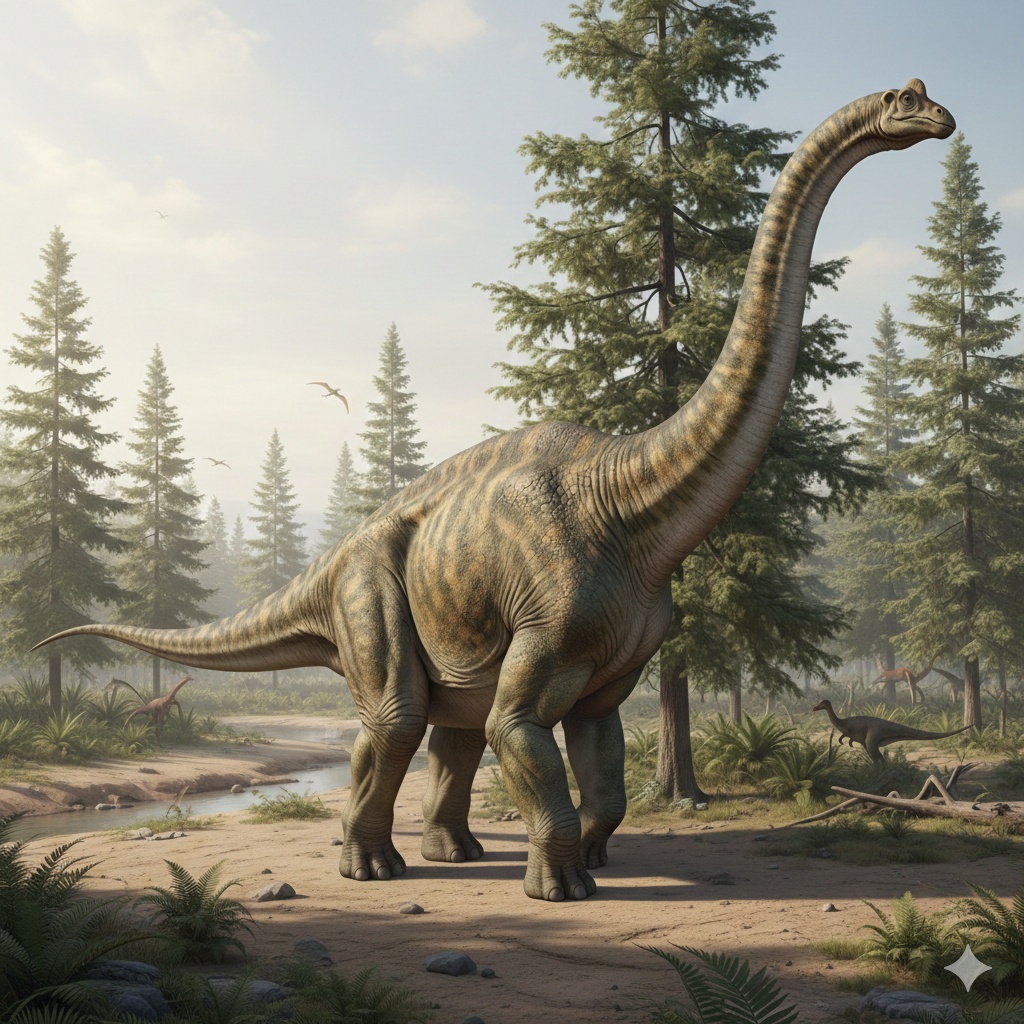
Most large animals are built close to the ground. Brachiosaurus went the other direction entirely. With a neck long enough to look into a fourth-floor window, it could reach food sources that nothing else could touch. It was one of the tallest animals ever to walk the planet — and it achieved that by essentially becoming a living crane.
Velociraptor

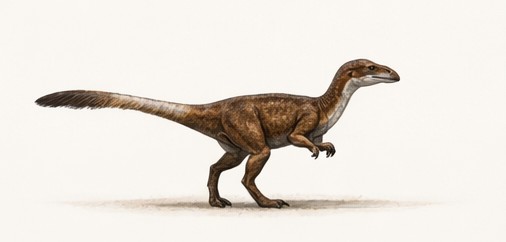
Here’s the thing about Velociraptor: the version in the films is not the real animal. The real Velociraptor was roughly turkey-sized, probably feathered, and hunted prey far smaller than a human. That doesn’t make it less interesting — if anything, the truth is stranger. It was quick, it was clever relative to most of its contemporaries, and its closest living relatives are birds. Your backyard pigeons share more DNA with Velociraptor than Velociraptor shares with T. rex.
Ankylosaurus

If you were designing an animal specifically to be hard to kill, you’d probably land somewhere close to Ankylosaurus. Armoured from snout to tail, with a club at the end that could shatter bone, this was a herbivore that nothing wanted to mess with. Even the top predators of the Late Cretaceous would have thought twice. Ankylosaurus didn’t need to be fast. It needed to be impossible to stop.
Brachiosaurus
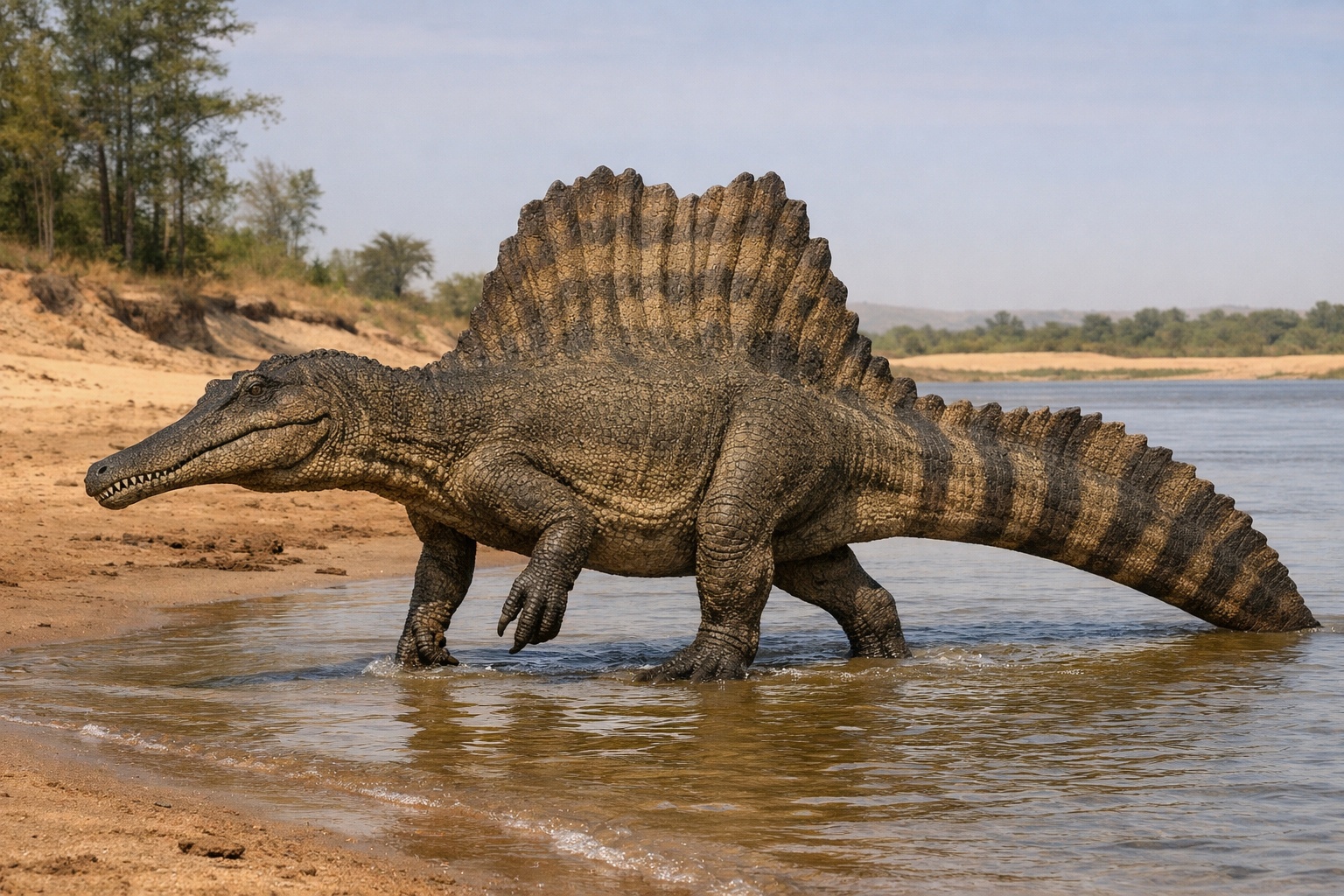
Spinosaurus was bigger than T. rex. That sentence surprises people every time. It also spent significant time in or around water — hunting fish, wading through rivers, built differently from almost every other large theropod. The sail along its back (or possibly a hump — scientists are still working on it) made it one of the most visually distinctive animals of the Cretaceous. It was also one of the last to have its story properly told, because good Spinosaurus fossils are genuinely hard to find.
More Coming
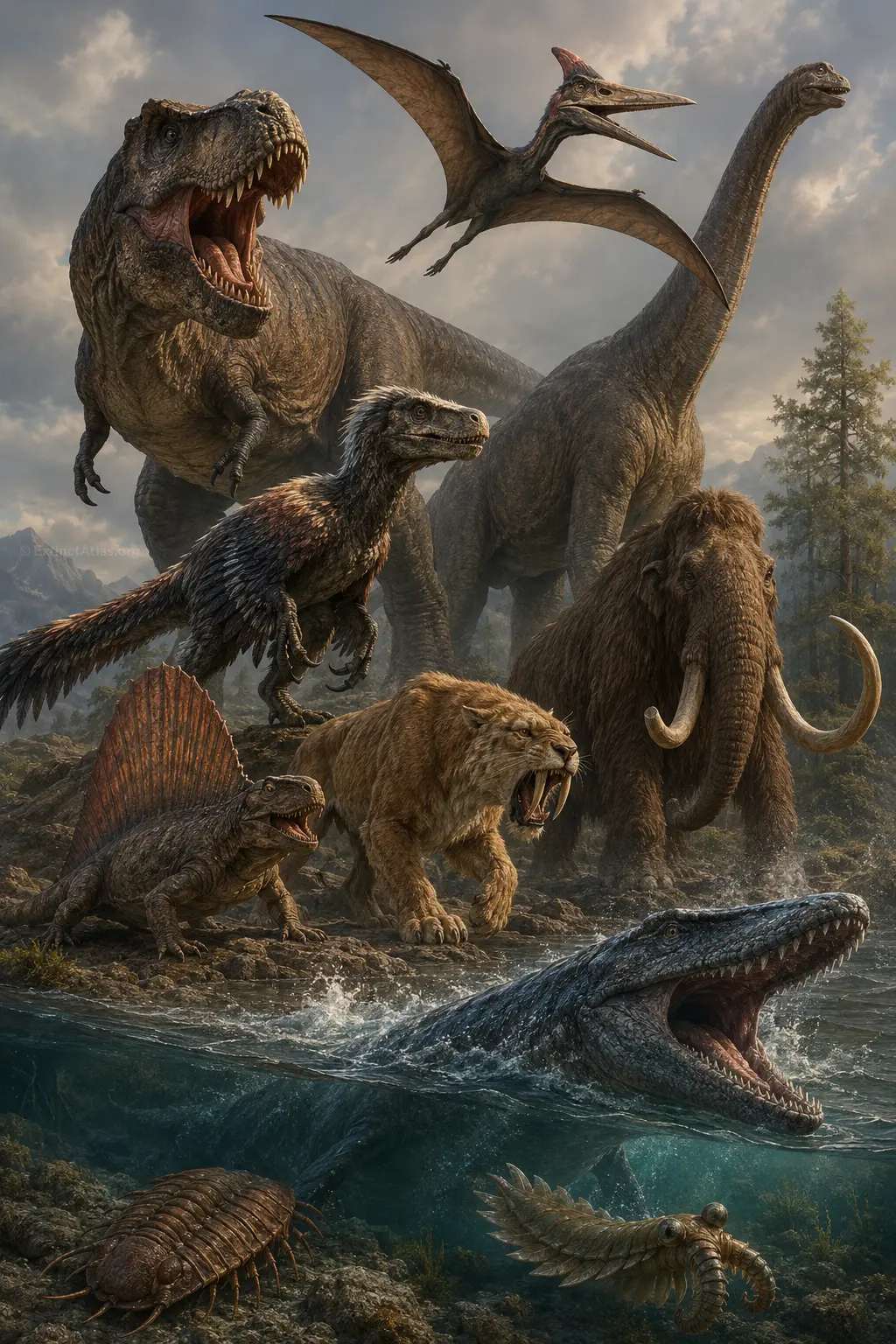
Dinopedia is growing. The species above are just the beginning — each one gets its own full page packed with fast facts, fun facts, myth-busting, and the occasional thought experiment about what would happen if they turned up in a modern city park.
More species are on the way. The further you go into prehistory, the stranger things get.
What You’ll Find on Every Species Page
Every Dinopedia species page is built the same way, because the best parts of palaeontology deserve a consistent home.
Fast Facts — Size in things you can picture. Speed. Diet. Where the fossils were found. No jargon.
Fun Facts — The stuff that makes you say “wait, really?” Surprising, accurate, and worth repeating at dinner.
Myths & Movie Moments — What Hollywood got wrong, what your old textbooks missed, and what the fossil record actually shows.
What If It Appeared Today? — A thought experiment. If this animal showed up in its modern geographic equivalent, what would happen? It’s speculative, it’s grounded, and it’s more fun than it probably should be.
Could You Keep One as a Pet? — The answer is almost always no. The reasons are always interesting.
Fun First. Accurate Underneath.
Dinopedia is written for anyone curious enough to want the real story — not the dumbed-down version, not the overhyped Hollywood version, just the actual animal as the fossil record reveals it. That means short paragraphs, no unnecessary jargon, and facts that are surprising because they’re true, not because they’ve been stretched.
If you want the deep science — the anatomy papers, the phylogenetic debates, the full fossil evidence — we’ll point you toward ExtinctAtlas, where the researchers go. Dinopedia is the entry point. The place where you remember why these animals are worth caring about.
Sixty-six million years is a long time. These creatures still have things to tell us.
Start exploring. Pick a species. See where it takes you.