

Dinosaurs are often imagined as enormous animals, but fossil evidence shows that they ranged from truly colossal giants to species no larger than a chicken. This size diversity did not occur randomly—each major dinosaur clade followed its own evolutionary pathways, producing both large and small-bodied forms adapted to different ecological roles.
This article explores the largest and smallest known dinosaurs within several major clades, based on currently available fossil evidence. All size estimates are approximate and subject to revision as new discoveries are made.
How Dinosaur Size Is Estimated
Before comparing extremes, it is important to understand how size estimates are derived:
- Incomplete fossils are common; many “largest” dinosaurs are known from fragmentary remains.
- Length and mass are inferred using comparative scaling, often based on limb bone dimensions.
- Mass estimates vary widely depending on methodology (volumetric models vs. scaling equations).
- “Smallest” dinosaurs are usually identified from relatively complete skeletons, making those estimates more secure.
For this reason, the terms “largest known” and “smallest known” are used throughout.
Sauropodomorpha (Long-Necked Herbivores)
Sauropodomorphs include the largest terrestrial animals known to have ever existed, but the group also began with small, lightly built ancestors.
Largest Known: Argentinosaurus

- Lived during the Late Cretaceous of South America
- Known from fragmentary but exceptionally large vertebrae and limb bones
- Estimates suggest lengths of 30–35 meters and masses exceeding 60 metric tons
- Represents the upper extreme of dinosaur body size, though uncertainty remains high
Smallest Known: Saturnalia

- Lived during the Late Triassic
- Length approximately 1.5–2 meters
- Likely weighed 10–15 kilograms
- Demonstrates that sauropodomorphs began as small, agile animals before evolving giant size
Theropoda (Bipedal Carnivores)
Theropods include both the largest predatory dinosaurs and the smallest non-avian dinosaurs known.
Largest Known: Spinosaurus

- Lived in North Africa during the Late Cretaceous
- Estimated length 14–16 meters
- Unusual proportions adapted for a semi-aquatic lifestyle complicate mass estimates
- Currently considered the longest known theropod
Smallest Known: Parvicursor
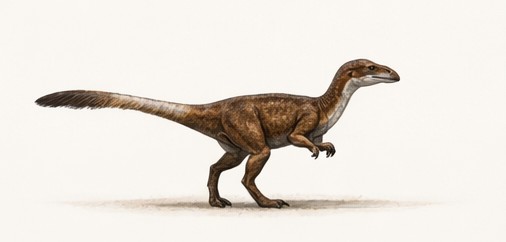
- Lived in Late Cretaceous Asia
- Estimated length under 1 meter
- Likely weighed less than 1 kilogram
- Represents extreme miniaturization among non-avian dinosaurs
Ornithopoda (Beaked Herbivores)
Ornithopods ranged from small, fast-moving bipeds to massive, bulky grazers.
Largest Known: Shantungosaurus

- Lived during the Late Cretaceous of Asia
- Length estimates up to 16 meters
- Weighed approximately 15–20 metric tons
- The largest known hadrosaur, and among the largest ornithopods
Smallest Known: Orodromeus

- Lived during the Late Cretaceous of North America
- Length approximately 2–2.5 meters
- Lightweight, agile body adapted for speed and maneuverability
Thyreophora (Armored Dinosaurs)
This clade includes heavily armored dinosaurs, but body size varied considerably over time.
Largest Known: Ankylosaurus

- Lived during the Late Cretaceous
- Length approximately 6–8 meters
- Mass estimated at 6–8 metric tons
- Among the most heavily built dinosaurs known
Smallest Known: Scelidosaurus

- Lived during the Early Jurassic
- Length approximately 4 meters
- An early member of the armored dinosaur lineage with lighter armor and a smaller size
Ceratopsia (Horned Dinosaurs)
Horned dinosaurs show a wide size range, from small bipedal forms to massive quadrupeds.
Largest Known: Triceratops

- Lived during the Late Cretaceous of North America
- Length approximately 8–9 meters
- Mass estimates range from 6 to 12 metric tons
- One of the largest and most robust ceratopsians
Smallest Known: Yinlong

- Lived during the Late Jurassic of China
- Length approximately 1.2 meters
- Early, lightly built ceratopsian retaining bipedal locomotion
Fact-Checked Comparison Table
| Clade | Largest Known Species | Estimated Length | Smallest Known Species | Estimated Length |
|---|---|---|---|---|
| Sauropodomorpha | Argentinosaurus | ~30–35 m | Saturnalia | ~1.5–2 m |
| Theropoda | Spinosaurus | ~14–16 m | Parvicursor | <1 m |
| Ornithopoda | Shantungosaurus | ~14–16 m | Orodromeus | ~2–2.5 m |
| Thyreophora | Ankylosaurus | ~6–8 m | Scelidosaurus | ~4 m |
| Ceratopsia | Triceratops | ~8–9 m | Yinlong | ~1.2 m |
Why Size Extremes Matter
Extreme size differences reveal how dinosaurs:
- Occupied diverse ecological niches
- Responded to environmental pressures
- Evolved independently toward gigantism or miniaturization
Importantly, large size was not universally advantageous—small dinosaurs were often faster, more flexible, and just as evolutionarily successful.
Conclusion
Dinosaurs were not defined by size alone. From the immense bulk of Argentinosaurus to the tiny frame of Parvicursor, their evolutionary success lay in adaptability rather than scale. As new fossils are discovered, these records may change, but the extraordinary range of dinosaur sizes remains one of the clearest demonstrations of their ecological diversity.